
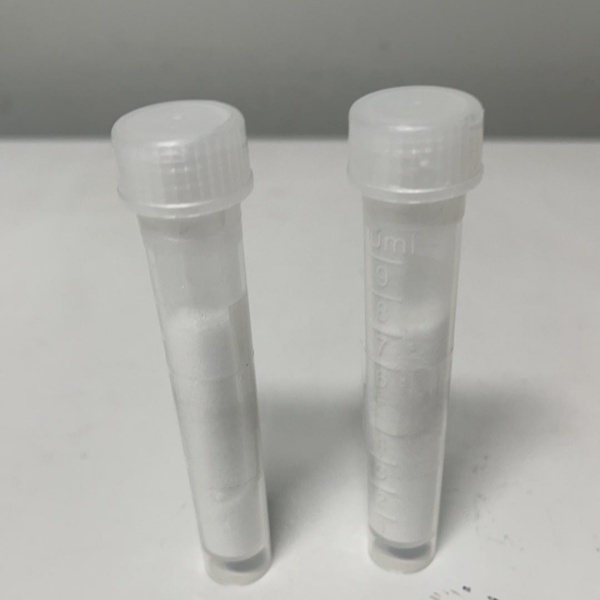
103429-31-8, CTOP, peptide synthesis
Dirction:CTOP, CAS 103429-31-8, sequence D-Phe-Cys-Tyr-D-Trp-Orn-Thr-Pen-Thr-NH2. It serves as a potent and highly selective μ-opioid receptor antagonist. Supplied as white solid with HPLC purity ≥98%. Suitable for pharmacology research. Store sealed at -20°C away from light. For laboratory research only, not for clinical use.
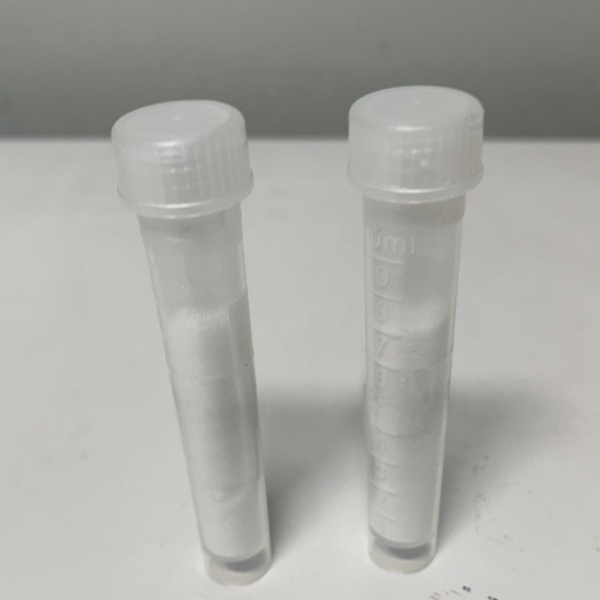
basic information:
brand: solid extension
appearance traits : white powder
storage: shading , cool drying , sealed preservation purity: ≥ 99% main use : Polypeptide Research Use
execution standard: enterprise standard
specifications: mg/g/kg, etc ( subject to customer requirements )
sales Scope: Global
common polypeptide problems:
how is peptide purity calculated?
Solid Tuo is by reverse phase high performance liquid chromatography (RP-HPLC) determination of the target peptide in the peptide bond at a specific absorption wavelength of the ultraviolet absorption value of the calculation of the purity of the polypeptide, water and acetonitrile gradient elution to separation and purification. Among them, water and residual salt cannot be measured by UV detector, and other impurities exist in the detection results, including incomplete sequence peptide (short peptide with one or more amino acid residues less than the target peptide), truncated sequence (polypeptide generated by preventing the generation of incomplete sequence peptide from blocking), and incomplete deprotection peptide (polypeptide generated during synthesis or final cleavage).
What is net peptide content?
It is important to understand the difference between the net content of the polypeptide and the total weight (gross weight) of the polypeptide. In general, a polypeptide lyophilized powder sample contains not only the polypeptide, but also some other substances, such as water, solvents absorbed by the polypeptide, counter ions and salts.
The total polypeptide weight (gross weight) refers to the weight of all these mixtures.
The net peptide content is relative to non-peptidic substances, counterions and moisture, and after these are removed, the remaining is the net peptide content. The net peptide content can be determined by elemental nitrogen analysis or amino acid composition analysis and is typically 50-80% of the total peptide weight.
Net peptide content is distinct from polypeptide purity, which refers to the percentage of polypeptide of interest to the polypeptide in the sample.
Products categories
-
Myomodulin,110570-93-9, Peptide Customization
-
Amyloid β/315229-44-8 /GT Peptide/Peptide Supplier
-
RSV M (187-195), Hangzhou Polypeptide Company, Polypeptide Synthesis
-
![[Sar9 Met(O2)11]-Substance P/110880-55-2/GT Peptide/Peptide Supplier](https://www.gtpeptide.com/uploadfile/202506/12e247d1e5d2799.jpg)
[Sar9 Met(O2)11]-Substance P/110880-55-2/GT Peptide/Peptide Supplier
-
3106-85-2,Ac-D-E, Hangzhou Polypeptide Source Company
-
Cecropin B (free acid)/203265-23-0 /GT Peptide/Peptide Supplier