
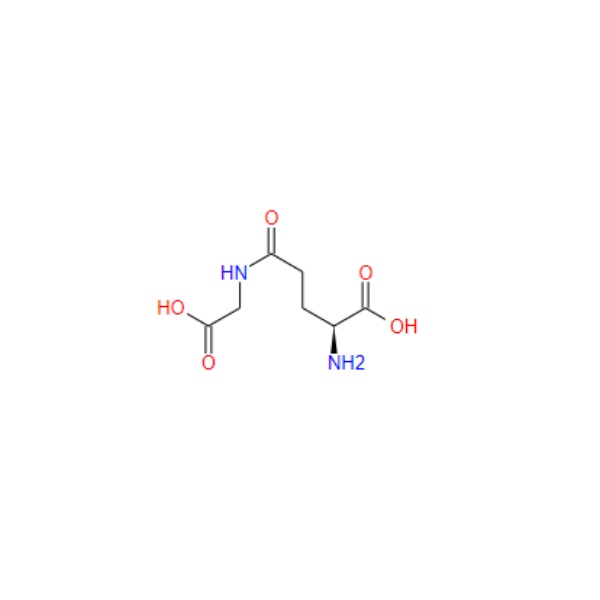
1948-29-4,H-Glu(Gly-OH)-OH, peptide synthesis
Dirction:γ-Glu-Gly (CAS 1948-29-4), also γ-Glutamylglycine, a γ-glutamyl dipeptide, formula C7H12N2O5, MW 204.18 g/mol. This white to off-white solid is a glutathione metabolite resembling GABA, acting as a partial agonist of NMDA GluN1 and mGlu5 receptors. It supports neuroscience, amino acid metabolism, glutamatergic pathway research, purity over 98% by HPLC under strict QC. For laboratory research use only, not human consumption.
basic information:
brand: solid extension
appearance traits solid polypeptide white powder
storage:-20 ℃ dry and dark storage, polypeptide powder can be stable for 1-2 years; sealed preservation purity: ≥ 99% main use : Polypeptide Research Use
execution standard: enterprise standard
specifications: mg/g/kg, etc ( subject to customer requirements )
sales Scope: Global
solubility: H-Glu(Gly-OH)-OH soluble in water
peptide FAQ;
1. Polypeptide Preservation
peptides generally need to be stored in dark for long-term storage, and should be stored below -20 degrees,-80°C is better, and can be stored at 4°C in the short term. It can be transported at room temperature for a short time. The polypeptide is stable at -20°C or lower, particularly when freeze-dried and stored in a desiccator.
Before opening the package and weighing, please balance the polypeptide to room temperature in a desiccator. If the polypeptide is not balanced to room temperature, it is easy to have water condensation after opening the lid, which will reduce the stability of the polypeptide product.
The polypeptide containing Cys, Met or Trp is easily oxidized, and deoxygenated buffer is essential for its dissolution, because this polypeptide is easily oxidized by air. Before sealing the bottle, nitrogen or argon protection will reduce the oxidation. Polypeptides containing Gln or Asn are relatively easy to degrade, and all of these peptides have a shorter shelf life than simple peptides that do not contain these problems.
The polypeptide whose first amino acid at the N-terminal is Gln is very unstable and will be degraded within a few days. It is suggested that Gln should not appear at the N-terminal when designing the sequence.
Products categories
-

KR-22/GT Peptide/Peptide Supplier
-

Leptin (22-56) human/183598-56-3/GT Peptide/Peptide Supplier
-

Gramicidin/1405-97-6/GT Peptide/Peptide Supplier
-

[Leu15]-Gastrin I human/39024-57-2 /GT Peptide/Peptide Supplier
-

Apelin-36 (human)/252642-12-9/GT Peptide/Peptide Supplier
-

PrP 106-126/GT Peptide/Peptide Supplier