
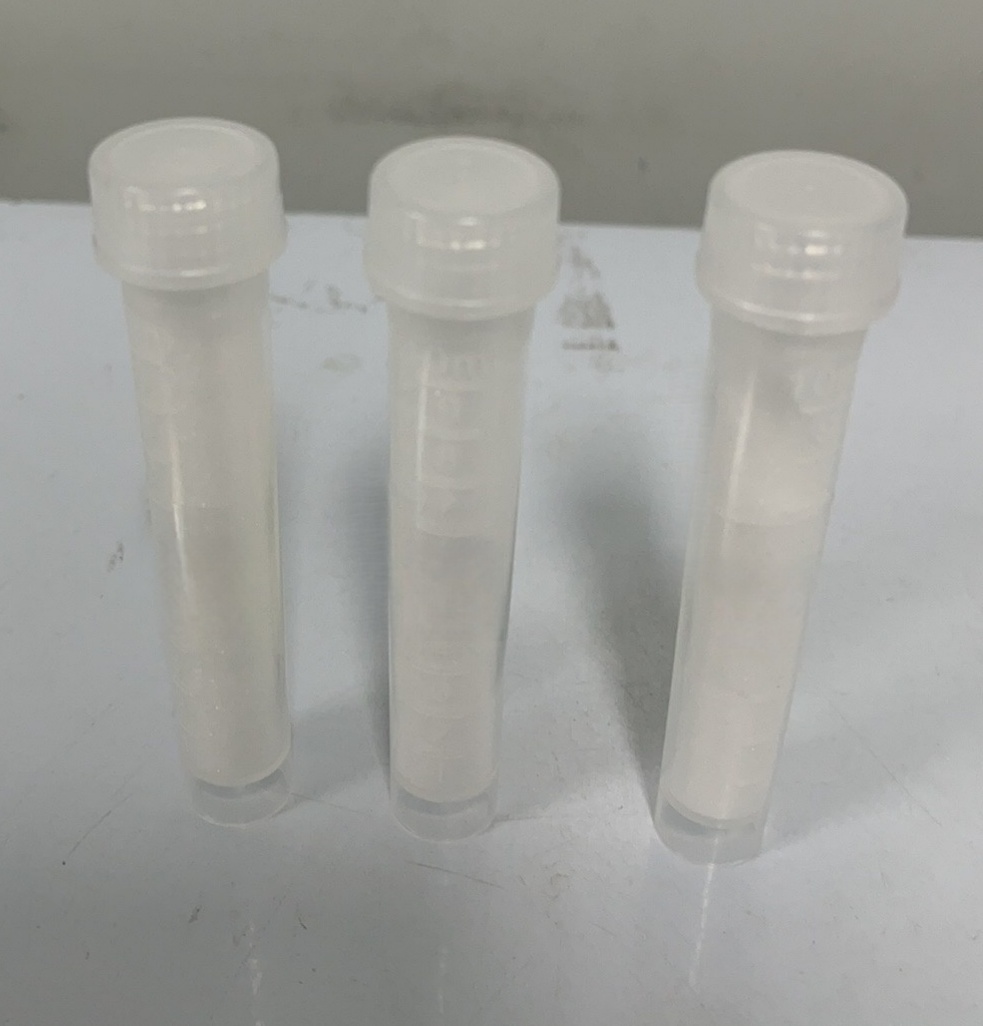
Frag 17-23,885340-08-9,Frag 17-23 Peptide
Description:Frag 17-23 (CAS 885340-08-9), also known as TB500, is an acetylated synthetic heptapeptide corresponding to residues 17–23 of thymosin β4 (Tβ4). It binds G-actin, inhibits actin polymerization, promotes cell migration, angiogenesis, and tissue repair, while exerting anti-inflammatory effects. Widely used in research on wound healing, muscle/bone/nerve regeneration, and cardiac repair.
Specifications
Apperance: White to off-white powder
Purity(HPLC): ≥98.0%
Single Impurity: ≤2.0%
Acetate Content(HPLC): 5.0%~12.0%
Water Content (Karl Fischer): ≤10.0%
Peptide Content: ≥80.0%
Packing and Shipping: Low temperature, vacuum packing, accurate to mg as required.
FAQ:
Which end is best for my research?
By default, the peptide ends with an N-terminal free amino group and a C-terminal free carboxyl group. The peptide sequence often represents the sequence of the mother protein. In order to be closer to the mother protein, the end of the peptide often needs to be closed, that is, n-terminal acetylation and C-terminal amidation. This modification avoids the introduction of excess charge, and also makes it more able to prevent exonucliase action, so that the peptide is more stable.
Is it necessary to put a gap between the peptide and the dye?
If you are going to attach a large molecule (such as a dye) to the peptide, it is best to put a space between the peptide and the ligand to minimize interference with the receptor by the folding of the peptide itself or by the folding of its conjugate. Others do not want intervals. For example, in the folding of proteins, it is possible to determine how far apart the folding structure of an amino acid is by attaching a fluorescent dye to a particular site.
If a Frag 17-23 is 98% pure, what is 2%?
Two percent of the composition was truncated or deleted sequence fragments.
If you want to do a biotin modification at the N terminal, do you need to put a gap between the biotin and the peptide sequence?
The standard biotin labeling procedure used by our company is to attach an Ahx to the peptide chain, followed by biotin. Ahx is a 6-carbon compound that acts as a barrier between the peptide and the biotin.
Products categories
-
Pentapeptide-25/GT Peptide/Peptide Supplier
-
Palmitoyl Teterapeptide-10/887140-79-6/GT Peptide/Peptide Supplier
-
Oligopeptide-68/1206525-47-4/GT Peptide/Peptide Supplier
-
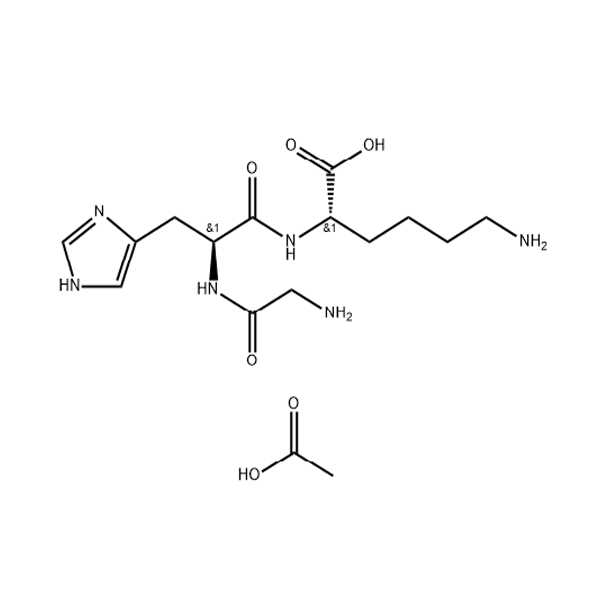
Tripeptide-1/72957-37-0/GT Peptide/Peptide Supplier
-
Palmitoyl Pentapeptide-5/GT Peptide/Peptide Supplier
-
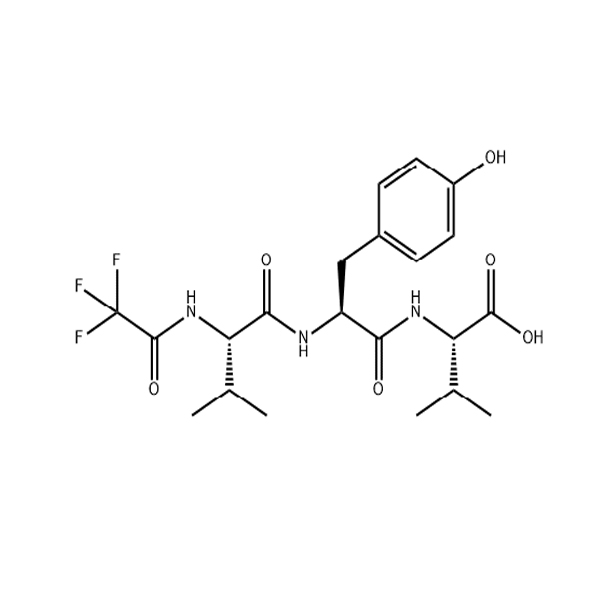
Trifluoroacetyl Tripeptide-2/64577-63-5/GT Peptide/Peptide Supplier