
The Story of Copper Peptide
In 1973, American biochemist Loren Pickart discovered a naturally occurring tripeptide in human plasma capable of binding copper ions. This molecule was later named GHK-Cu. Research showed that copper peptide levels in young individuals are approximately 2.5 times higher than in older adults, and that it plays a significant role in wound healing.
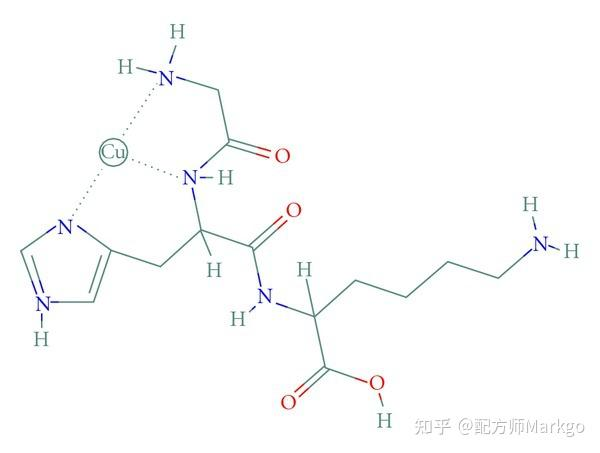
As scientific research progressed, copper peptide was found to possess multiple bioactive functions in skincare, including supporting repair, enhancing antioxidant capacity, and improving firmness and elasticity. Structurally, it is formed by the tripeptide glycine–histidine–lysine (GHK) b
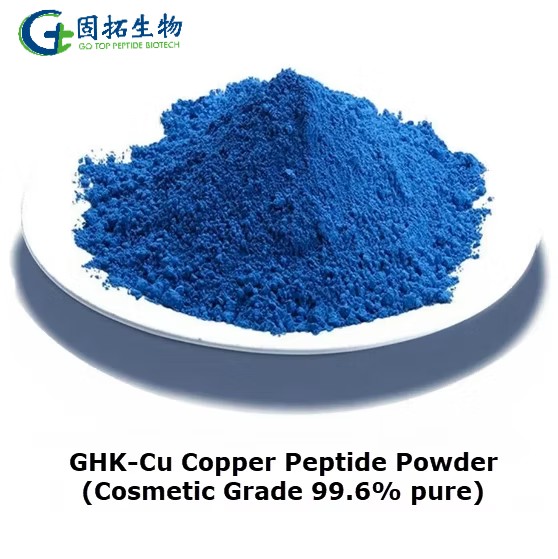
inding with copper ions, creating a stable blue complex with a sapphire-like appearance. It has since become recognized as a premium “blue repair” ingredient in advanced skincare.
As early as the 1990s, several European and American brands incorporated copper peptide into anti-aging and repair-focused formulations. With advancements in biotechnology and purification processes, this once “rising star” has regained attention in recent years and is now considered a key functional skincare ingredient.
What Are the Benefits of Copper Peptide?
1. Anti-Wrinkle & Firming — Restructuring the Skin
Copper peptide functions as a signaling peptide. After penetrating the skin, it sends repair signals to fibroblasts, stimulating the production of:
Type I, IV, and VII collagenElastin
Proteoglycans and glycosaminoglycans
By enhancing the integrity of the dermal extracellular matrix (ECM), it helps strengthen skin structure, improve elasticity and firmness, and reduce the appearance of fine lines and wrinkles.
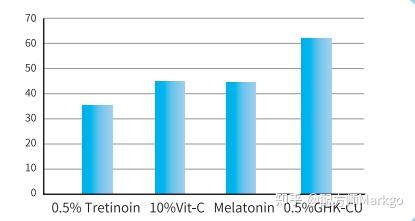
Comparative studies have shown that copper peptide significantly promotes procollagen synthesis, demonstrating strong anti-aging potential.
2. Deep Repair & Barrier Reinforcement
Copper peptide promotes the proliferation of fibroblasts and keratinocytes, enhances basement membrane stability, and supports the synthesis of glycosaminoglycans and structural proteins. This contributes to:
Repair of damaged skin
Restoration of barrier function
Post-procedure skin recovery support
It also helps protect fibroblasts from UV-induced stress, reduces MMP-1 secretion, and assists in mitigating inflammation associated with skin sensitivity.
Studies measuring hydroxyproline and glucuronic acid levels have shown increased collagen and glycosaminoglycan accumulation following GHK-Cu application, further supporting its reparative efficacy.
3. Antioxidant Defense & Anti-Aging Support
Copper peptide promotes the production of antioxidant enzymes such as superoxide dismutase (SOD), helping neutralize free radicals and peroxides while reducing UV-induced DNA damage. As a result, it contributes to:
Brighter-looking skin
Improved dullness
Delayed photoaging
Copper peptide is a multifunctional active ingredient that combines both anti-aging and reparative benefits.
Why Is Copper Peptide Both “Precious” and “Delicate”?
Precious — High-purity copper peptide requires advanced purification technology, resulting in relatively high production costs. This makes it a premium ingredient typically used in high-end repair formulations.
Delicate — The stability of copper ions requires careful formulation control. High concentrations of acids (such as AHAs), retinoids, or strong antioxidants may affect its activity. Therefore, effective product development often involves streamlined formulations or advanced encapsulation and stabilization technologies to preserve performance.
Additionally, as a hydrophilic active ingredient, copper peptide requires optimized delivery systems to ensure adequate penetration and stability for maximum efficacy.
Post time: 2026-03-03