
Although traditional single-target GLP-1 receptor agonists can effectively improve hepatic steatosis and alleviate mild inflammation, the reversal effect on moderate to severe liver fibrosis is weak, and there is a significant efficacy ceiling. In the past five years, the research and development focus of global pharmaceutical companies has shifted to * * single-molecule multi-target co-agonist polypeptide * *. Through the simultaneous activation of two or more metabolic receptors by one peptide chain, multiple pathways work together to improve obesity, diabetes and NASH. Compared with single-target polypeptide, it has stronger potential for weight loss, lipid reduction and anti-fibrosis, and has also driven the continuous increase in orders for customized long peptides in the polypeptide synthesis industry. At present, the mainstream multi-target polypeptide pipeline on the market is divided into three categories, supporting raw material synthesis needs are different.
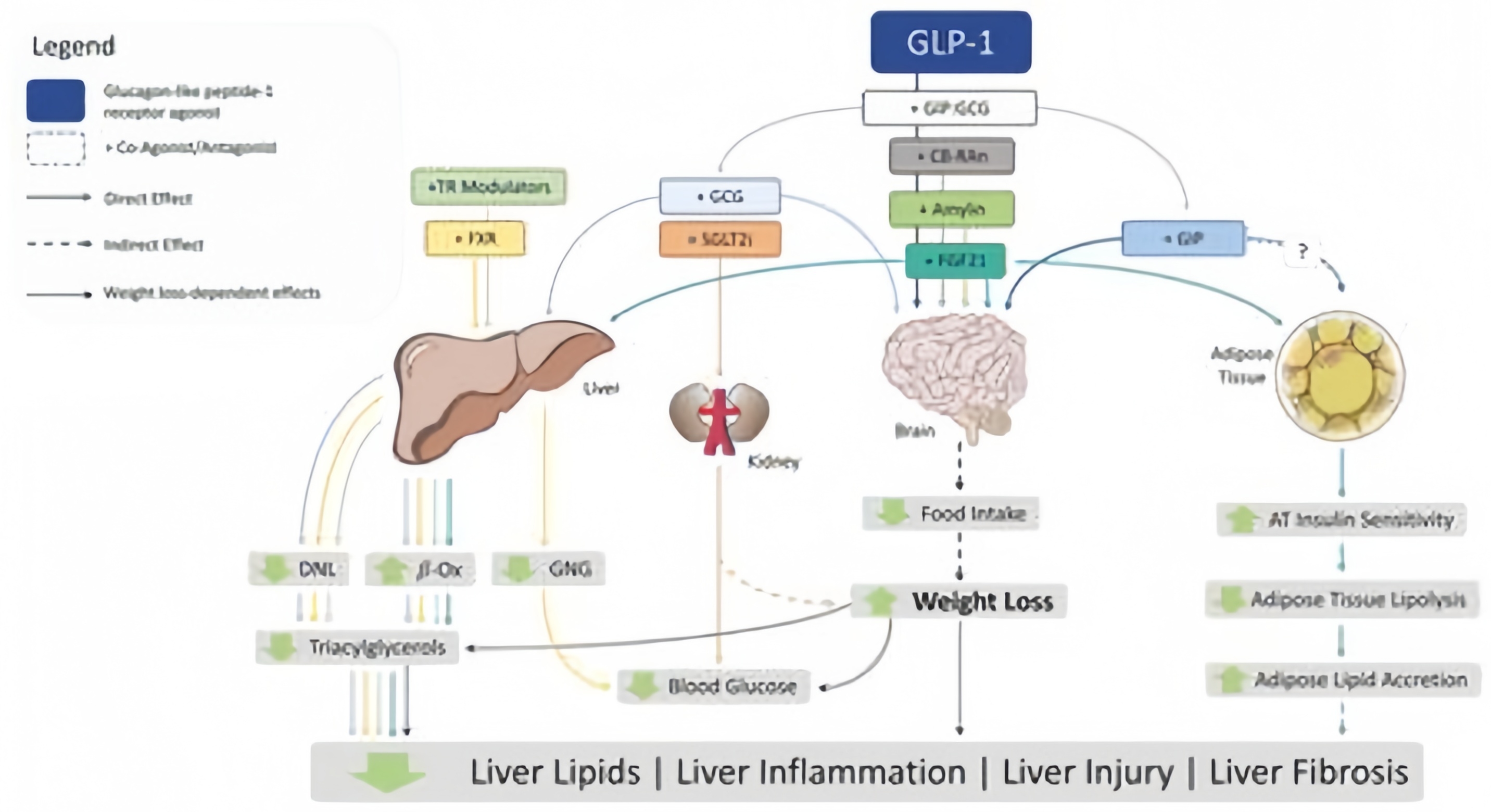
The first category: GLP-1/GIP double target co-agonist polypeptide, representing the molecule tilpopeptide. GIP is another type of incretin in the human body, complementary to the GLP-1 pathway, dual activation can further enhance insulin sensitivity, suppress appetite, reduce visceral fat accumulation. Clinical data confirmed that the effect of telpotide on reducing liver fat, serum ApoB48, and fibrosis markers is better than that of selmegraglutide, and the compliance of once a week administration is higher. This kind of polypeptide amino acid sequence is longer, need special side chain modification process, most of them can not be in stock, pharmaceutical companies need to place customized synthesis orders in advance, conventional purity of 98% pharmaceutical grade for II, III clinical.
The second category: GLP-1/GCG glucagon double-target co-agonist polypeptide, representing codurin, Pemvidutide(ALT-801), Efinopegdutide. The biggest advantage of this category is that the glucagon receptor directly targets the liver, activates liver fatty acid β oxidation, directly reduces liver triglyceride synthesis and deposition, and solves the pain point of single-target GLP anti-fibrosis deficiency. In the animal model of NASH induced by high fat and high fructose, these polypeptides can simultaneously down-regulate lipid synthesis, inflammation and collagen genes. In human trials, the effect of reducing transaminase is outstanding. At present, many molecules have entered Phase II NASH clinical trials and are the preferred polypeptide raw materials for the research and development of new fibrosis drugs.
The third category: GLP-1/GIP/GCG ternary triagonist polypeptide, front screening pipeline SAR441255. A single peptide chain activates three metabolic pathways at the same time, which is the leading direction of peptide drug research and development. Animal experimental data show that the weight loss and lipid-lowering effect of ternary polypeptide is significantly better than that of double target molecules, which can greatly reduce liver lipids and liver injury markers in mice. However, the molecular structure is complex, the synthesis difficulty is extremely high, and the purification cost is expensive. At this stage, it is only used for preclinical drug screening, and has not yet entered the large-scale human clinical stage. It belongs to the laboratory frontier catalog peptide. In addition to single-molecule multi-target peptides, peptides combined with small molecules are also mainstream research and development routes. The mainstream combination regimen includes: GLP polypeptide + FXR/ACC liver-targeted small molecule, GLP-1 + SGLT2 hypoglycemic inhibitor, GLP-1 + canaglitide (amyloid long-acting polypeptide). Combination therapy through polypeptide regulation of systemic metabolism, small molecules directly repair liver damage to achieve complementary efficiency, the corresponding supporting short peptide, long peptide procurement demand increased simultaneously, polypeptide factory can be one-stop synthesis of a complete set of experimental raw materials. Overall industry trends, simple single-target GLP polypeptide market gradually saturated, multi-target long peptides, custom-modified peptides become the main growth force, polypeptide synthesis enterprises can stabilize high-purity bulk synthesis of long modified peptides, become the core evaluation criteria for pharmaceutical companies to screen raw material suppliers.
Post time: 2026-08-20