
Heterocyclic compounds constitute the largest and most diverse family of organic compounds. More than half of the known organic compound molecules contain at least one heterocyclic structure. Heterocycles are the core skeleton of most drugs, agrochemicals, natural products and bioactive molecules. Heteroatoms are mostly nitrogen, oxygen and sulfur, which can significantly change the electronic structure, molecular polarity and chemical reaction activity of the ring system.
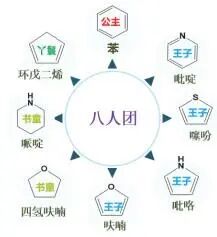
Five-membered heterocycles: pyrrole, furan, thiophene
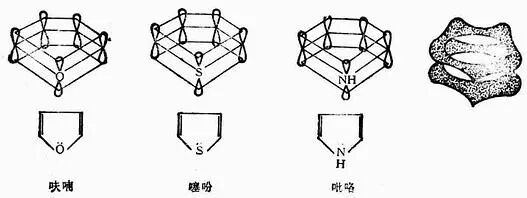
pyrrole, furan and thiophene belong to five-membered aromatic heterocycles containing 6 π electrons, of which 4 π electrons are derived from the diene system and the other 2 π electrons are from the lone pair of heteroatoms. The above three types of compounds can be prepared the Paal-Knorr synthesis: 1,4-dicarbonyl compounds react with ammonia (preparation of pyrrole), water (preparation of furan), and phosphorus pentasulfide (preparation of thiophene), respectively. The synthesis of Hantzsch pyrrole is completed by using α-halogenated ketone, β-ketone ester and ammonia as raw materials.
Aromatic stability can determine the order of reactivity: thiophene (most aromatic, 120 kJ/mol)> pyrrole (90 kJ/mol)> furan (about 65 kJ/mol). The three electrophilic substitution reactions occurred preferentially at the C2 position; the furan reaction activity was the highest, and the thiophene reaction activity was the lowest.
indole and Fischer indole synthesis
indole is composed of a benzene ring combined with a pyrrole ring, and is one of the most important heterocyclic mother nuclei in the field of drug research and development. The synthesis of Fischer indole discovered in 1883 is still the mainstream preparation process: phenylhydrazine and aldehyde/ketone condensation, acid-catalyzed [3,3]-σ rearrangement, cyclization, removal of ammonia to obtain the product. the indole electrophilic substitution occurs preferentially at the C3 position, the σ-complex intermediate derived from this site is more stable. The indole nucleus is found in tryptophan, serotonin, melatonin, and a variety of alkaloid molecules.
Six-membered heterocycle: pyridine
pyridine is a six-membered aromatic heterocycle in which one CH unit on the benzene ring is replaced by a nitrogen atom. Hantzsch pyridine synthesis uses two equivalents of β-ketoester to condense with aldehyde and ammonia, and then oxidize the dihydropyridine intermediate to obtain pyridine.
Pyridine is an electron-deficient aromatic ring, which is different from benzene ring in nature; when it has a leaving group, it is easy to undergo nucleophilic substitution at the C2 and C4 positions; the electrophilic substitution reaction occurs at the C3 position, and the reaction conditions are relatively harsh. The nitrogen atom lone pair of electrons makes pyridine an excellent transition metal sigma electron-donating ligand, and it is also a common organic base with a conjugate acid pKa of about 5.2.
Quinoline and Isoquinoline
both quinoline and isoquinoline are benzene ring and pyridine ring structures, and there are differences in the fusion sites between the two. The Skraup synthesis method is a classical synthesis route for quinoline, which is completed by cyclization of unsaturated aldehyde intermediates to construct the core of quinoline. Bischler-Napieralski synthesis is a classical route for the preparation of isoquinoline, the raw material is β-phenylethyl amide, and the product is obtained by intramolecular cyclization.
The core structure of quinoline can be used for the development of antimalarial drugs; isoquinoline is the core core of many active alkaloids.
Pyrimidine, Purine and Nucleic Acid Bases
pyrimidine (1,3-diazine), purine (pyrimidoimidazole ring) are the heterocyclic cores of DNA, RNA bases. Cytosine, thymine and uracil belong to pyrimidine derivatives; adenine and guanine belong to purine derivatives. Bases rely on specific hydrogen bonding (A-T/U, G-C) to encode genetic information. Structural analogs of pyrimidine and purine have been widely developed as antitumor and antiviral drugs, and representative compounds include 5-fluorouracil, 6-mercaptopurine, and acyclovir.
Heterocyclic Compounds in Materials Science Applications
the application of heterocyclic compounds is not limited to the fields of biology and medicine. Conductive polymers such as polypyrrole, polyfuran and polythiophene can be prepared by electrochemical oxidation or chemical oxidation, and their conductive properties can be regulated by doping modification. polythiophene derivatives are used in organic field effect transistors (OFETs) and organic photovoltaic devices (OPVs). Macrocyclic heterocyclic compounds such as porphyrin and phthalocyanine can be used in dye-sensitized solar cells, photodynamic therapy and catalytic systems. OLED technology uses Alqover, Ir(ppy) and other heterocyclic light-emitting materials to achieve efficient electroluminescent effect.
Post time: 2026-08-25