
Keyword:LL-37,154947-66-7,LL-37 Peptide
In the complex landscape of the human immune system, few molecules are as versatile and critical as LL-37. As the only human member of the cathelicidin family of antimicrobial peptides (AMPs), LL-37 serves as a frontline defender against infections, a regulator of immune responses, and even a contributor to tissue repair and disease modulation. Its unique structure and multifaceted functions have made it a focal point of research in immunology, microbiology, and clinical medicine—with implications for treating infections, inflammatory disorders, and even cancer. Below, we break down exactly what LL-37 is, how it works, and why it matters, supported by peer-reviewed research and optimized for search visibility.
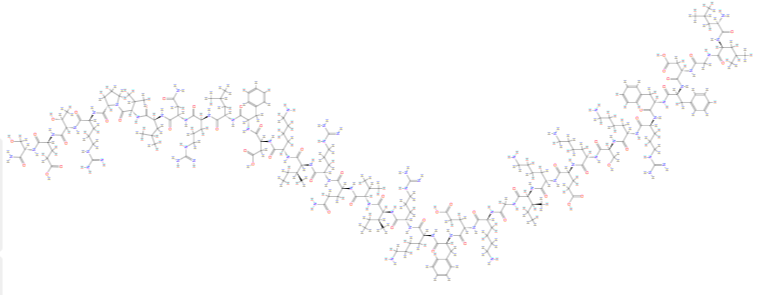
What Exactly Is LL-37? A Primer on Its Structure and Origin
LL-37 is a small, cationic (positively charged) peptide—meaning it carries a positive electrical charge at physiological pH—that plays a non-negotiable role in the body’s innate immune system, the first line of defense against pathogens before the adaptive immune system kicks in. Its name is derived from its structure: it consists of 37 amino acids, with the first two amino acids being leucine (abbreviated as “L”), hence “LL-37.” Unlike many immune molecules that are produced only by specialized immune cells, LL-37 is synthesized by a wide range of cell types, making it a ubiquitous presence in the body’s barrier tissues and immune response networks.
LL-37 is not produced in its active form; instead, it is synthesized as a precursor protein called hCAP18 (human cationic antimicrobial protein 18), which is stored in the granules of immune cells like neutrophils and macrophages, as well as in barrier cells such as those lining the skin, lungs, gut, and urinary tract. When the body detects a threat—such as a bacterial infection, tissue damage, or inflammation—hCAP18 is cleaved extracellularly by enzymes called proteases, releasing the active LL-37 peptide. Structurally, LL-37 forms an amphipathic α-helix, a shape where one side of the peptide is hydrophobic (water-repelling) and the other is hydrophilic (water-attracting) and positively charged. This unique structure is key to its function: the hydrophobic side allows it to interact with the lipid membranes of pathogens, while the positively charged side enables it to bind to the negatively charged surfaces of bacteria, viruses, and fungi.
Research has confirmed that LL-37’s structure is essential to its activity; any modification to its amino acid sequence or helical structure significantly impairs its ability to fight pathogens and regulate immunity (Sørensen OE, et al., 2001).

The Core Functions of LL-37: Beyond Antimicrobial Activity
While LL-37 is best known for its ability to kill pathogens, its role in the body extends far beyond simple antimicrobial defense. It acts as a “swiss army knife” of the immune system, with functions that span infection control, immune modulation, tissue repair, and even antitumor activity. Each of these functions is interconnected, making LL-37 a critical regulator of overall bodily homeostasis.
The primary function of LL-37 is its broad-spectrum antimicrobial activity, meaning it can target and eliminate a wide range of pathogens, including bacteria, viruses, fungi, and even biofilms—communities of bacteria that form a protective layer and are resistant to antibiotics. Its amphipathic α-helix structure allows it to bind to the negatively charged membranes of pathogens (which are rich in anionic lipids), where it forms pores or disrupts the membrane’s integrity, leading to cell lysis (rupture) and death. This mechanism is effective against both Gram-positive bacteria (such as Staphylococcus aureus and Streptococcus pneumoniae) and Gram-negative bacteria (such as Escherichia coli and Pseudomonas aeruginosa), making LL-37 a powerful weapon against bacterial infections.
While LL-37 can fight pathogens directly, it also plays a crucial role in regulating the immune system, ensuring that inflammatory responses are balanced—neither too weak (allowing infections to persist) nor too strong (causing tissue damage). This process, called immunomodulation, makes LL-37 a key player in both acute and chronic inflammatory conditions.
In acute inflammation (such as that caused by a cut or infection), LL-37 acts as a pro-inflammatory molecule: it recruits immune cells like neutrophils, monocytes, and T cells to the site of infection or damage, guiding them to where they are needed most. It also stimulates the production of pro-inflammatory cytokines—molecules that amplify the immune response—such as interleukin-8 (IL-8) and monocyte chemoattractant protein-1 (MCP-1), which help to clear pathogens and initiate tissue repair.
Tissue Repair and Angiogenesis: Healing Damaged Tissues
Beyond its immune functions, LL-37 plays a vital role in tissue repair and wound healing. When tissues are damaged—whether by a cut, burn, or infection—LL-37 is released at the site of injury, where it promotes the migration and proliferation of epithelial cells (the cells that line the body’s surfaces), helping to rebuild the damaged tissue (a process called re-epithelialization). It also stimulates angiogenesis—the formation of new blood vessels—which is essential for delivering oxygen and nutrients to the damaged area, speeding up healing.
Research has shown that LL-37 levels are elevated in healing wounds, and deficiencies in LL-37 are linked to delayed wound healing, such as in individuals with diabetes or chronic ulcers. By promoting epithelial cell growth and blood vessel formation, LL-37 helps to restore tissue integrity and prevent infections from taking hold in damaged areas.
Antitumor Effects: A Potential Weapon Against Cancer
In recent years, researchers have discovered that LL-37 also has antitumor properties, making it a promising target for cancer therapy. It works in several ways to fight cancer: first, it induces apoptosis (programmed cell death) in cancer cells, preventing them from multiplying and spreading. Second, it inhibits tumor angiogenesis, cutting off the blood supply that tumors need to grow and metastasize (spread to other parts of the body). Third, it modulates tumor immunity, helping the body’s immune system recognize and attack cancer cells, which are often able to evade detection by the immune system.
Studies have shown that LL-37 is expressed in various types of cancer, including breast cancer, lung cancer, and skin cancer, and its levels are often associated with patient outcomes. For example, higher LL-37 levels in some cancers are linked to better survival rates, as it helps to suppress tumor growth (Zhang C, et al., 2022). The full study on LL-37’s antitumor effects can be found here: https://doi.org/10.1016/j.celrep.2022.111005.
LL-37 in Clinical Practice: Implications for Disease and Therapy
Given its multifaceted functions, LL-37 has significant clinical relevance. Abnormal levels of LL-37—either deficiency or excess—are linked to a range of diseases. For example, LL-37 deficiency is associated with recurrent infections (since the body’s frontline defense is weakened), atopic dermatitis (a chronic inflammatory skin condition), rosacea, and chronic obstructive pulmonary disease (COPD). On the other hand, excess LL-37 is linked to autoimmune and inflammatory disorders like psoriasis, lupus, and rheumatoid arthritis, where the immune system is overactive.
These associations have made LL-37 a promising target for therapeutic development. For example, synthetic LL-37 peptides are being studied as alternatives to antibiotics, particularly as antibiotic resistance becomes a growing global threat. They are also being explored for use in wound care products to speed up healing and prevent infections. Additionally, LL-37-based therapies are being investigated for the treatment of cancer, autoimmune diseases, and inflammatory disorders (Deslouches B, et al., 2017). Learn more about the therapeutic potential of LL-37 here: https://doi.org/10.1128/AAC.02377-16.
Key Takeaways: Why LL-37 Matters
LL-37 is far more than just an antimicrobial peptide—it is a multifunctional molecule that sits at the intersection of immunity, infection control, tissue repair, and disease regulation. Its unique structure allows it to fight a wide range of pathogens, balance immune responses, heal damaged tissues, and even combat cancer. As research continues to uncover its full potential, LL-37 is poised to become a critical tool in the fight against antibiotic resistance, chronic inflammation, and cancer.
Whether you’re a researcher, healthcare provider, or simply interested in understanding how your immune system works, LL-37 is a molecule worth knowing about. Its versatility and clinical relevance make it one of the most exciting areas of immunology research today.
Post time: 2026-04-22