
In the face of increasingly severe multidrug-resistant bacterial infections, the development progress of a targeted antibiotic always captures the attention of the scientific community. Today's focus, Murepavadin (CAS: 944252-63-5), is precisely such a novel antimicrobial agent designed to combat Pseudomonas aeruginosa infections. Its unique mechanism of action and exceptional target specificity have secured its prominent position in research on resistant bacterial therapies.
As a cyclic peptide antibiotic composed of 14 amino acids, murepavadin's most significant advantage lies in its high specificity. It precisely targets LptD, the lipopolysaccharide transport protein D in the outer membrane of Pseudomonas aeruginosa. By inhibiting the insertion of lipopolysaccharides into the outer membrane, it disrupts bacterial envelope integrity, ultimately leading to bacterial death. This targeted mechanism not only avoids traditional antibiotic resistance pathways but also minimizes disruption to the human microbiota, effectively addressing the common issue of intestinal flora imbalance associated with broad-spectrum antibiotics.
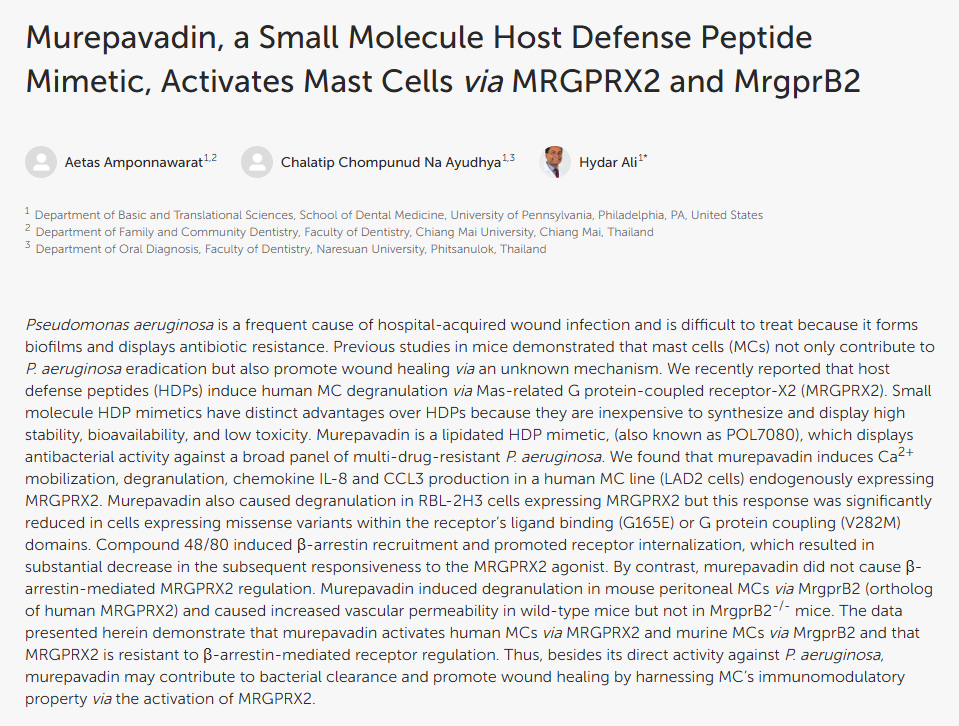
Scientific data have long validated its potent antibacterial activity: In multiple in vitro studies, murepavadin exhibited MIC₅₀ and MIC₉₀ values as low as 0.12 mg/L against Pseudomonas aeruginosa. It inhibited over 99.1% of more than 1,200 clinical isolates collected from the US, Europe, and China, demonstrating activity 4 to 8 times greater than that of polymyxin B and colistin. In murine infection models, doses ranging from 2 to 10 mg/kg elevated survival rates to 100% post-infection while significantly reducing bacterial loads in blood and peritoneal fluid. Notably, it remains effective against carbapenem-, colistin-, and other drug-resistant strains, offering a novel solution for clinically challenging XDR (extensively drug-resistant) infections.
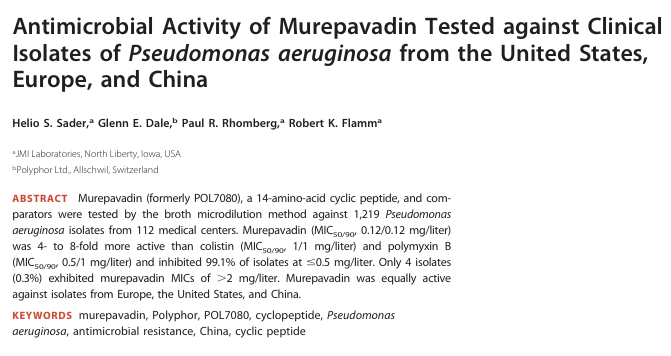
Recent studies have also revealed its synergistic therapeutic potential: Sublethal concentrations of murepavadin can enhance bacterial outer membrane permeability, significantly improving the bactericidal efficacy of β-lactam antibiotics. The combination not only demonstrated synergistic therapeutic effects in acute pneumonia mouse models but also delayed the development of antibiotic resistance. Furthermore, as a host defense peptide mimetic, it activates the immunomodulatory functions of mast cells, assisting the host in bacterial clearance and tissue repair—achieving dual effects of "antibacterial action + immune modulation".
Currently, Murepavadin is in Phase III clinical trials, primarily targeting hospital-acquired pneumonia and ventilator-associated pneumonia caused by Pseudomonas aeruginosa. At a time when drug-resistant bacterial infections pose a threat to global public health, this novel antibiotic, characterized by its specificity, potent efficacy, and low toxicity, undoubtedly brings new hope to clinical treatment. Related research is continuously advancing, and it is hoped that it will soon translate into clinically available treatments, adding a key tool in the fight against drug-resistant infections.
Post time: 2026-02-09