
Amino Acid Protecting Groups
The 20 common amino acids can be classified by their side chains into several categories: aliphatic amino acids (Ala, Gly, Val, Leu, Ile), aromatic amino acids (Phe, Tyr, Trp, His), amino acids with amide or carboxyl side chains (Asp, Glu, Asn, Gln), amino acids with basic side chains (Lys, Arg), sulfur‑containing amino acids (Cys, Met), hydroxy‑containing amino acids (Ser, Thr), and imino amino acid (Pro).
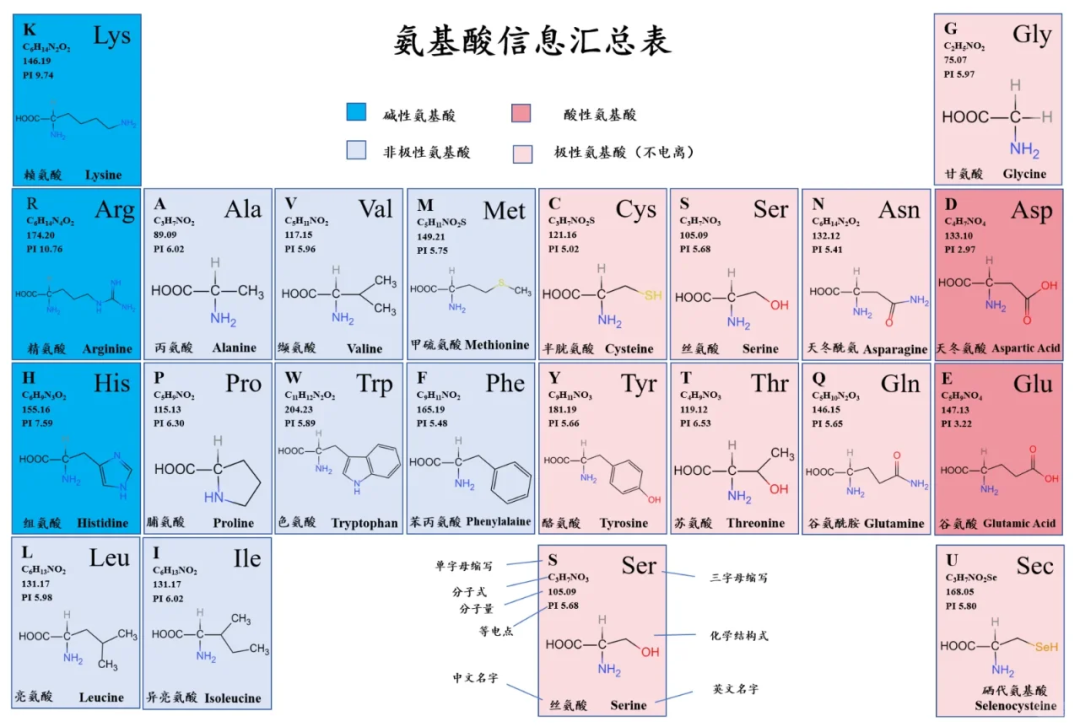
Protection of amino acids is critical in peptide chemical synthesis and directly determines the success of synthesis. Many of the 20 common amino acids bear reactive side chains and therefore require protection. In general, these protecting groups are required to be stable and free of side reactions during synthesis, and to be completely and quantitatively removable after synthesis is finished. Amino acids that usually require protection include Cys, Asp, Glu, His, Lys, Asn, Gln, Arg, Ser, Thr, Trp and Tyr. The groups to be protected include hydroxyl, carboxyl, thiol, amino, amide, guanidinyl, indolyl and imidazolyl groups. Among them, Trp may be unprotected because its indole moiety is relatively stable. Of course, under special circumstances, some amino acids can also remain unprotected, such as Asn, Gln, Thr and Tyr.
Three Common Conditions for Removal of Amino Groups
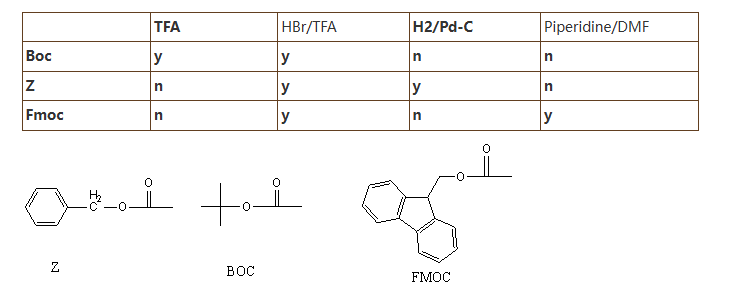
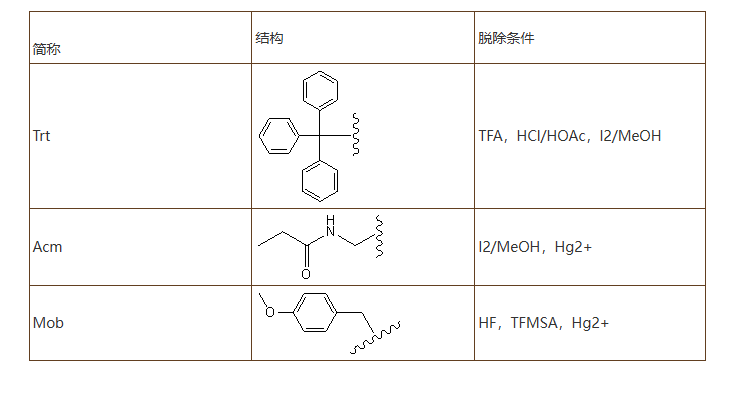
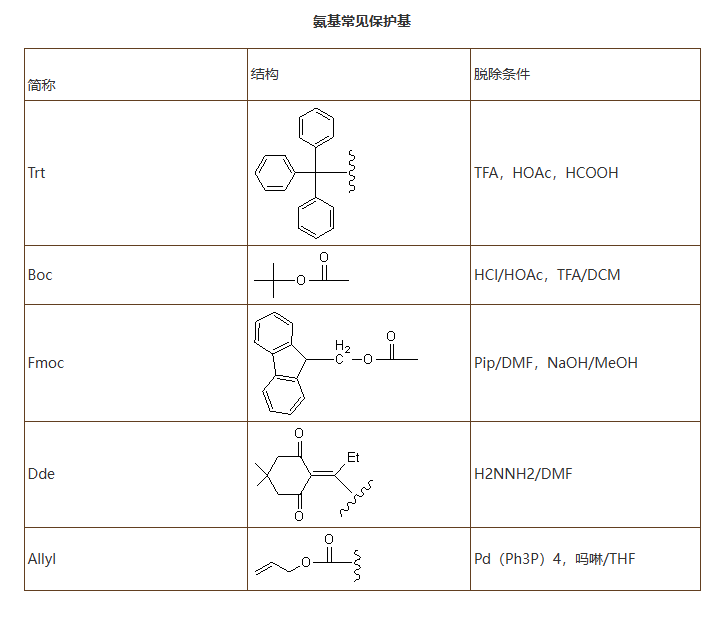
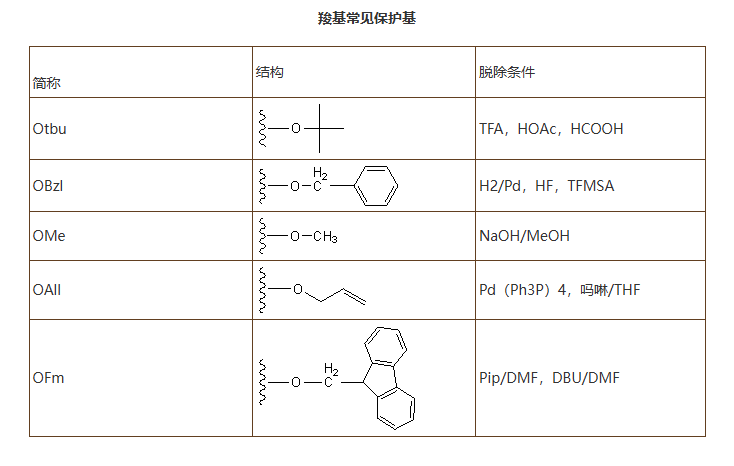
common 3 kinds of amino protecting group structureA great variety of protecting groups are available for amino acid side chains. A single side chain can be protected by multiple groups that can be selectively removed under distinct conditions, which is of great significance for cyclic peptide synthesis and peptide modification. Moreover, the selection of side‑chain protecting groups is closely related to the synthetic route; strategies differ between liquid‑phase and solid‑phase synthesis, and also between Boc and Fmoc protocols in solid‑phase synthesis. In a sense, peptide chemistry relies heavily on the flexible selection and combination of amino acid protecting groups. For the application of side‑chain protecting groups, please refer to Chapter 4 of Solid‑Phase Organic Synthesis: Principles and Applications by Wang Dexin. Here we mainly introduce several protecting groups and their deprotection methods for Cys, Lys and Asp. The three most common protecting groups for Cys are Trt, Acm and Mob, which enable the synthesis of peptides with multiple disulfide bonds. Common protecting groups for Lys include Boc, Fmoc, Trt, Dde and Allyl, offering numerous orthogonal protection strategies for cyclic peptide assembly via solid‑phase synthesis. Typical protecting groups for Asp include OtBu, OBzl, OMe, OAll and OFm, which likewise support diverse orthogonal protection schemes.
Common thiol protecting group
Post time: 2026-11-26