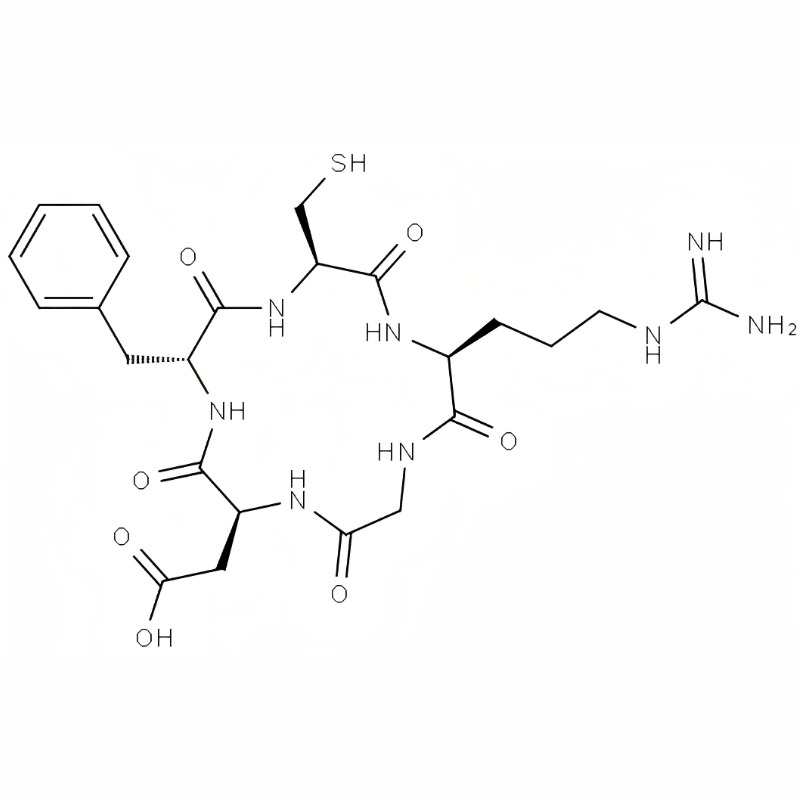
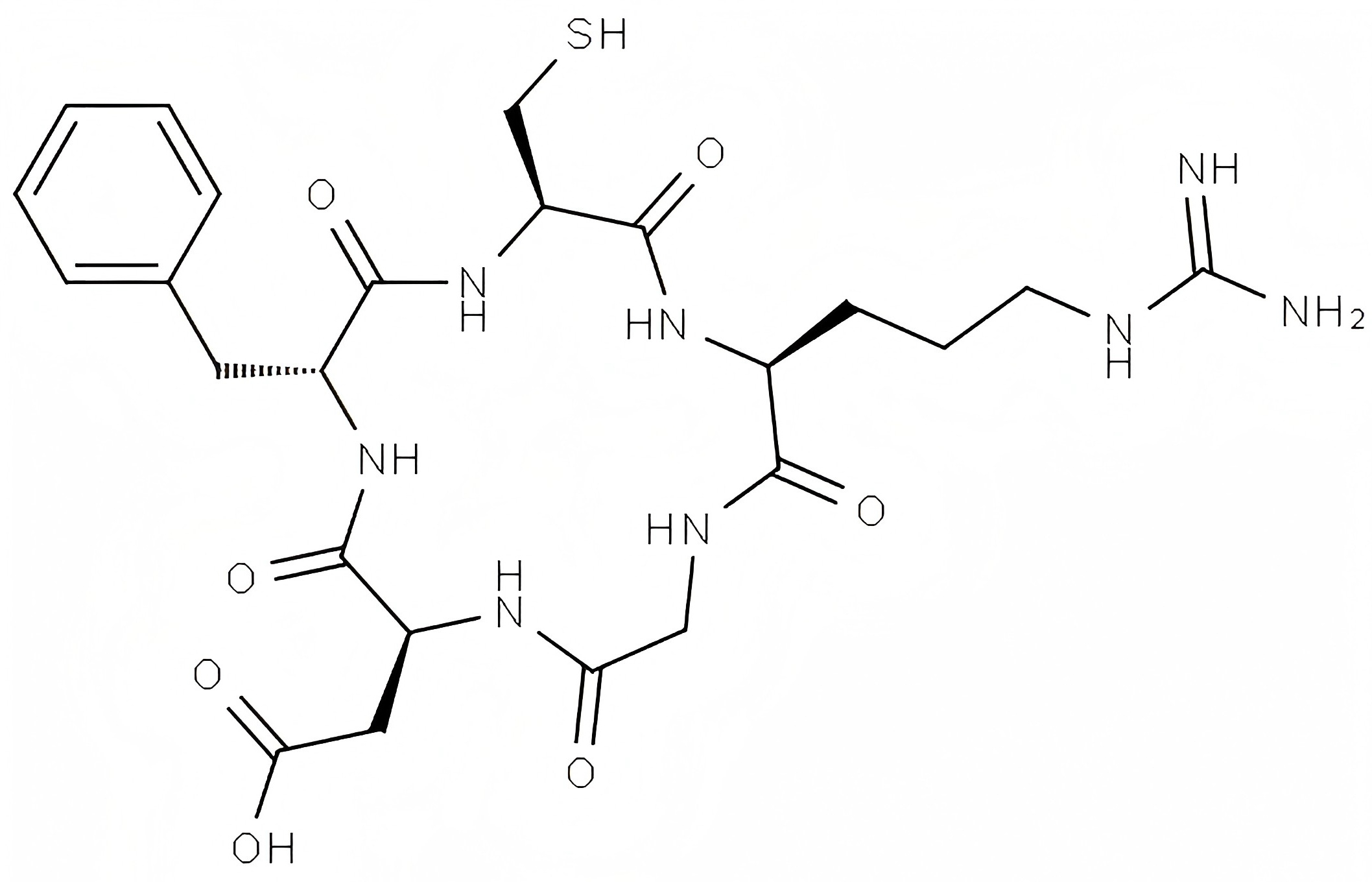
c(RGDfC)/862772-11-0/Synthetic peptide
Description
c(RGDfC) is a cyclic RGD peptide with high affinity for αvβ3, which can disrupt cell-integrin interactions. c(RGDfC) inhibits the expression of pluripotency genes in embryonic stem cells (ESCs) and suppresses the tumorigenic potential of mouse ESCs (mESCs) in vivo. c(RGDfC) can be used in tumor-related research.
Specifications
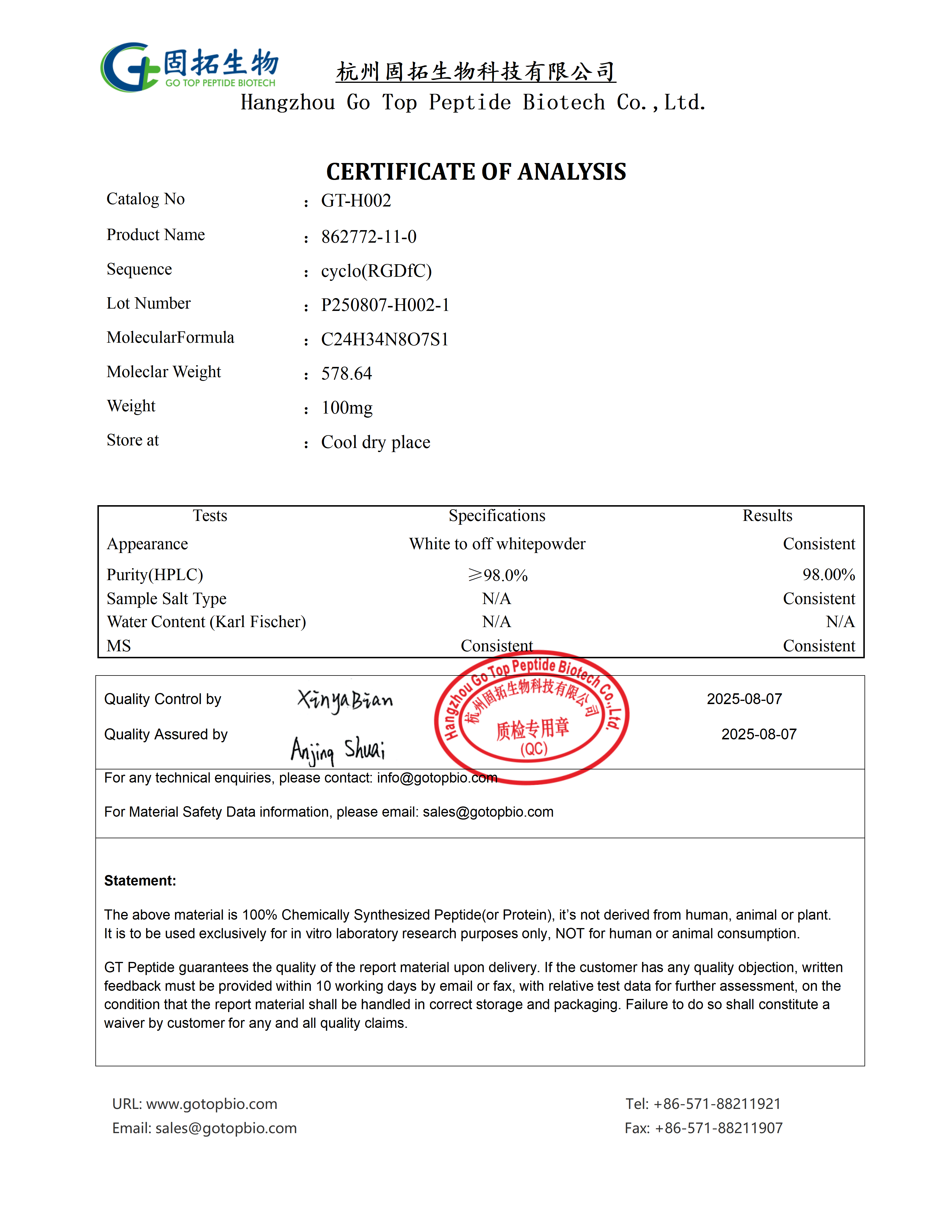
Apperance: White to off-white powder
Purity(HPLC): ≥98.0%
Single Impurity: ≤2.0%
Acetate Content(HPLC): 5.0%~12.0%
Water Content (Karl Fischer): ≤10.0%
Peptide Content: ≥80.0%
Packing and Shipping: Low temperature, vacuum packing, accurate to mg as required.
FAQ:
If you want to do a biotin modification at the N terminal, do you need to put a gap between the biotin and the peptide sequence?
The standard biotin labeling procedure used by our company is to attach an Ahx to the peptide chain, followed by biotin. Ahx is a 6-carbon compound that acts as a barrier between the peptide and the biotin.
How to choose the salt form of peptides?
The choice of the salt form of peptides needs to consider various factors, including the peptide sequence, stability, solubility, biotoxicity, and specific experimental requirements. By default, peptides are generally delivered as trifluoroacetic acid (TFA) salts; in addition, peptides can also exist in forms such as acetate, ammonium, and sodium salts.
How is the solubility of peptides?
The solubility of peptides is influenced by various factors, including amino acid sequence, charge, hydrophilicity and hydrophobicity, etc. When dissolving peptides, it is recommended to conduct a small-scale solubility test first, and after confirming complete dissolution, proceed with dilution. Go top bio provides solubility testing services.
How are the goods transported?
For your goods, we will entrust DHL、FedEx or other shipping companies to handle the shipment.